
Evil Apples: Play Dirty
Super Massive Ventures Inc.Word
4.536.54K Reviews
- Version
- 5.7.32
- Installs
- 5.00M
- Age Rating
- Teen
Screenshots
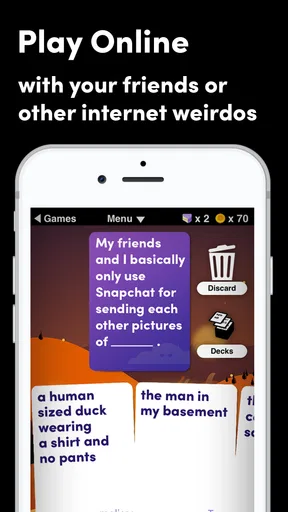
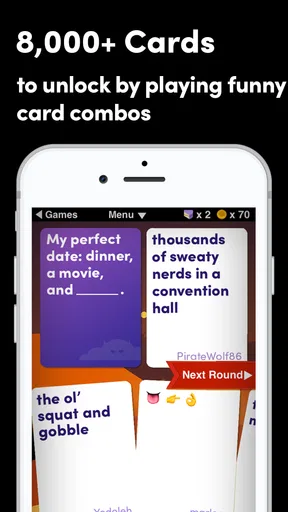
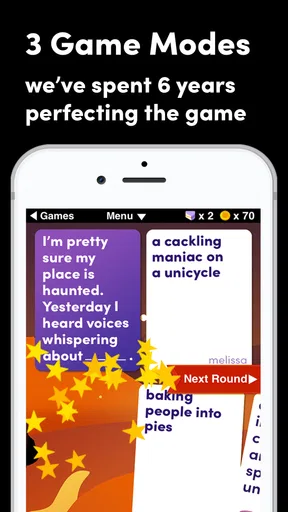
Our Review of Evil Apples: Play Dirty
 Analysis by Appyee
I found Evil Apples: Play Dirty easiest to understand as a party word game built around quick choices, surprising combinations, and a deliberately rude sense of humor. It is free to start, made by Super Massive Ventures Inc., and its Teen rating is important because the jokes and prompts are not designed for children or for every social setting. I would recommend it to adults who enjoy irreverent group games, but I would not treat it as a universally suitable option just because the basic download costs nothing.
After spending time with it, my main impression is that the game succeeds when the people around the same table already understand the tone. The cards are the entertainment, but the real experience comes from reading them aloud, judging how well an answer fits, and reacting to the other players. That makes it feel less like a solitary vocabulary exercise and more like a digital version of a provocative party-card game.
How Evil Apples works in a real group
The central rhythm is simple: a prompt appears, players choose a response, and everyone waits to see which combination gets the biggest reaction. The large card library gives the game plenty of material to draw from, with more than eight thousand cards and wild prompts advertised in its store summary. That breadth helps prevent the first few rounds from feeling completely predictable, although the humor will still depend heavily on your group.
I like that the game does not demand a long explanation before people can begin. One person can install it, invite friends into the activity, and start learning through the first few turns. That is useful at a casual gathering where nobody wants to read a rulebook. The trade-off is that the app’s simplicity leaves much of the social organization to the players. You still need to decide who is participating, how comfortable everyone is with the material, and when a prompt crosses a personal boundary.
A realistic use case is a small evening with friends who are already comfortable teasing one another. Instead of carrying a box of cards, one person can bring out a phone and let the group play from there. The app works best when players read the text clearly, pause long enough for everyone to consider it, and avoid turning every round into a race. If people are distracted, shy about reading aloud, or unfamiliar with this style of humor, the same mechanics can feel flat.
Compared with a traditional party card game, the obvious advantage is convenience. There are no cards to shuffle, lose, or clean up, and the phone can hold a much larger pool than a physical deck. Compared with a calmer word puzzle or a family-friendly word game, however, this is a very different proposition. Those alternatives are better for mixed-age groups, quiet solo play, or gatherings where the goal is language practice rather than shock humor.
Readability and navigation during a round
The game’s card-based format gives each turn a clear focus: read the prompt, inspect the available answers, and make a selection. That straightforward structure is a strength for new players because the next action is usually obvious. I found it easier to follow than a game that spreads instructions across several menus or relies on a complicated board.
Still, readable content is not only about whether words fit on a screen. Party play often means sharing a phone, passing it around, or glancing at it while other people are talking. A player with limited vision may need someone else to read the cards, and that changes the experience from independent play to assisted play. The app can remain enjoyable in that situation, but the group should agree in advance that reading cards aloud is part of the session rather than treating it as an inconvenience.
My practical suggestion is to establish a reading routine before the first serious round. Have each player announce when a card is ready, read the prompt at a steady pace, and repeat an answer if the room is noisy. This small habit is more useful than rushing through turns. It also helps people who process written language more slowly, who are playing in a second language, or who need extra time to understand an intentionally strange combination.
The game’s humor can create another readability issue: meaning is sometimes carried by implication, slang, or the contrast between a prompt and an answer. A player may be able to see every word and still need more time to interpret the joke. I would not pressure anyone to answer instantly. Giving the whole group a few quiet seconds makes the game fairer and often produces better choices.
Motor and sensory considerations
As a phone-based game, Evil Apples avoids the physical handling required by a boxed card game. There is no deck to fan out, no pile to sort, and no need to reach across a table to place a card. That can make it more manageable for someone who finds fine motor tasks tiring. The important action is generally selecting an on-screen option, so the group can also pass the device to a participant who prefers not to handle a large set of physical cards.
That convenience should not be confused with full accessibility. Touchscreen selection can still be difficult for people with tremors, reduced dexterity, or limited range of motion. In a shared session, a trusted partner can operate the phone after the player indicates a choice, but that arrangement works best when everyone treats it as normal assistance rather than taking control away from the player.
Sensory comfort is equally relevant. Party games are often played in bright rooms, around several conversations, with people reacting loudly to each answer. Someone who is sensitive to noise, fast turn-taking, or social pressure may enjoy the writing but dislike the environment. I would make the session more inclusive by lowering the background noise, keeping the phone at a comfortable viewing angle, and allowing a player to skip a round without having to explain why.
The content itself can be a sensory and emotional concern. The Teen rating signals that the material is intended for older audiences, and the deliberately dirty tone may be uncomfortable for people who prefer neutral language, avoid sexual references, or have strong boundaries around dark humor. Before starting, I would tell guests what kind of game it is rather than assuming the name alone communicates enough. That single warning can prevent an awkward situation.
One useful group rule is to separate “not funny to me” from “not acceptable for this room.” A player should be able to reject a card because it makes them uncomfortable, even if someone else thinks it is harmless. This is especially important when friends, relatives, coworkers, or new acquaintances are playing together. The game is at its best when the shock comes from playful absurdity, not from making one participant defend a personal boundary.
Playing in different situations
The app is naturally suited to informal social play, but the setting changes its accessibility. In a quiet living room, players can pass the phone around and read every prompt aloud. In a crowded restaurant or a noisy house, text may be harder to see and hear, and the pace can become uneven. On a long trip, the game may provide a welcome distraction for a group of adults, but it is a poor choice if younger passengers can easily see or hear the material.
It also fits short sessions better than a carefully planned game night. Because the basic idea is quickly understood, I can imagine opening it for a few rounds while waiting for food or while friends are settling in. The same low setup cost makes it useful when a group has not brought any entertainment. On the other hand, if you want a structured activity with a clear beginning and ending, a physical game with an agreed deck and rules may feel more satisfying.
For remote or separated friends, the usefulness depends on how the group communicates around the app. The game itself supplies the prompts and choices, but conversation still matters. A video call or voice chat can make reactions part of the experience; without that social layer, the cards lose much of their appeal. I would not choose it as a replacement for a solo word game because its strongest feature is the response of other people.
Language ability is another practical factor. Players who are comfortable with informal English, slang, and cultural references may understand the intended punchline quickly. Someone learning the language may need explanations, and explanations can remove the surprise that makes a card work. That does not make the game unusable for multilingual groups, but I would play slowly, accept that some jokes will need context, and avoid scoring people on how quickly they understand a reference.
The age guidance should shape the setting too. Since the game is rated Teen, I would keep it for an age-appropriate group and avoid using it as a general family activity. Its free price makes it easy for several people to try, but “free” does not mean every part of the experience is equally cost-free. The game includes in-app purchases ranging from ninety-nine cents to ninety-nine dollars and ninety-nine cents per item, so I would be careful about spending decisions, particularly if a child or someone unfamiliar with mobile purchases is using the device.
Where the experience still creates barriers
The biggest barrier is not the basic rule set; it is the combination of social pressure and mature humor. A person may understand the interface perfectly and still feel unable to participate because the group expects a fast, outrageous answer. That is why I would avoid presenting the game as an icebreaker for strangers. It can reveal differences in comfort very quickly, and not every group wants that kind of exposure.
Another limitation is dependence on a shared screen and a shared pace. Someone who needs extra time may feel hurried when other players are already laughing. Someone who cannot comfortably read the display may become dependent on another player. A considerate host can solve much of this by reading aloud, repeating cards, and allowing private thinking time, but those solutions require cooperation rather than coming automatically from the game.
Content fatigue is possible as well. A very large card pool sounds reassuring, yet no collection can guarantee that every prompt will feel fresh or equally funny to every group. The game’s appeal depends on personal taste, and repeated exposure to the same style of crude joke can make the experience less surprising. If your group prefers clever wordplay, gentle humor, or strategic competition, a different word game may hold attention for longer.
I also would not choose this app for players who want a deep solo progression system. Its value comes from judging combinations with other people, not from building a vocabulary, solving increasingly difficult puzzles, or mastering a complex strategy. A conventional crossword, anagram game, or turn-based word challenge is likely a better fit for a commuter who wants independent play with less social coordination.
The app has been available since November twenty-third, two thousand fourteen, and its current version is 5.7.32. It supports devices running iOS or Android 8.0 and above. Those details matter if you are planning a group session around an older phone: I would check compatibility before relying on it as the only entertainment. The game has reached over five million installs, with a 4.5 average from around one hundred fifty-seven thousand ratings and roughly thirty-seven thousand written reviews, so it is clearly established, but popularity does not remove the personal fit question.
My inclusive verdict
I think Evil Apples is a good recommendation for an adult group that wants a fast, irreverent word party game and is willing to manage the social side thoughtfully. Its card format is easy to explain, its digital delivery is convenient, and its large collection gives a gathering plenty of material to explore. I especially like it when one person takes responsibility for reading clearly and checking that everyone is comfortable with the tone.
I would skip it for children, mixed-age family gatherings, formal events, or groups that dislike explicit and provocative humor. I would also choose a traditional word puzzle for solo play, or a gentler party game when guests have different comfort levels. The free entry point makes trying it low-risk, but the in-app purchase range means I would keep spending under control and never assume that every player understands how optional purchases work.
My strongest advice is to treat accessibility as a group habit rather than a feature checklist: announce the mature tone, read cards aloud, slow down the turns, offer a no-explanation pass, and let players use assistance with the phone if needed. Those choices address the most important barriers I encountered. The best version of this game is not the loudest one; it is the version where everyone can decide how much of the humor and pace suits them.
In the right room, I would recommend giving it a try. Super Massive Ventures Inc. has built a recognizable, deliberately unruly party experience, and the app earns its place when friends want conversation as much as competition. Just bring realistic expectations: this is a mature social word game, not an all-purpose accessible game for every audience. If your group matches its tone and makes room for different reading, motor, sensory, and comfort needs, it can turn a spare half-hour into a memorable round of ridiculous answers.
Verdict
Strengths of Evil Apples: Play Dirty
- Quick, entertaining rounds that work well for casual multiplayer sessions.
- Large card collection keeps matches varied and encourages creative combinations.
- Private games make it easy to play with friends or selected players.
- Simple controls and clear card layouts are easy for new players to learn.
- Regular content updates can add fresh cards and replay value.
Limitations of Evil Apples: Play Dirty
- Humor can be crude or offensive, making it unsuitable for younger players.
- Online matchmaking quality depends heavily on the activity of other players.
- Some cards or features may require purchases or in-app currency.
- Games can become repetitive if you mainly play with the same card sets.
- An internet connection is generally needed for the full multiplayer experience.
Other Releases by Super Massive Ventures Inc.
View All
Evil Minds: Dirty Charades!
Word4.8
Similar Picks in This Category
View All
Word Search - Word Puzzle Game
Bluetile4.8

Word Search Quest - Puzzles
Blackout Lab4.8

CodyCross: Crossword Puzzles
Fanatee, Inc.4.7

Words of Wonders: Crossword
Fugo Games4.9

Wordscapes: Word puzzle game
PeopleFun4.7

Word Search Explorer
PlaySimple Games4.9
Frequently Asked Questions
What is Evil Apples: Play Dirty?
Evil Apples: Play Dirty is a humorous party card game for mobile devices, inspired by the classic fill-in-the-blank format. Players receive cards containing funny, strange, or occasionally offensive phrases and choose the response that best completes the prompt. Its appeal comes from unpredictable combinations, quick rounds, and the reactions of friends, although the humor may not be suitable for children or every audience.
Can I play Evil Apples: Play Dirty with friends?
Yes. The game is primarily designed for multiplayer entertainment and lets you play with friends or other participants through online game modes. It works best when everyone understands the type of humor involved and agrees on the atmosphere beforehand. Depending on the available mode and current app features, you may be able to invite friends directly or join public games with other players.
Is Evil Apples: Play Dirty free to download and play?
Evil Apples: Play Dirty can generally be downloaded for free, allowing users to try the core experience without paying upfront. However, the app may include advertisements, optional purchases, or premium content such as additional card packs and customization features. Before spending money, review the purchase details carefully, especially if children or other users have access to your device.
Is Evil Apples: Play Dirty appropriate for children?
Parents should review the game’s age rating and content carefully before allowing children to play. Evil Apples is known for adult-oriented, sarcastic, suggestive, and sometimes offensive humor, and user-generated interactions may also vary in tone. Even when a particular round seems harmless, the overall card library and multiplayer environment may not be appropriate for younger players.
Does Evil Apples: Play Dirty require an internet connection?
An internet connection is normally needed for the main multiplayer experience, account-related functions, advertisements, updates, and access to online content. Playing offline may be limited or unavailable, depending on the version installed and the specific game mode. For the smoothest experience, use a stable Wi-Fi or mobile-data connection, particularly when joining matches with friends or public players.
Play our best games!


